


Connect with us
contact@neuroflares.com


December 24, 2025
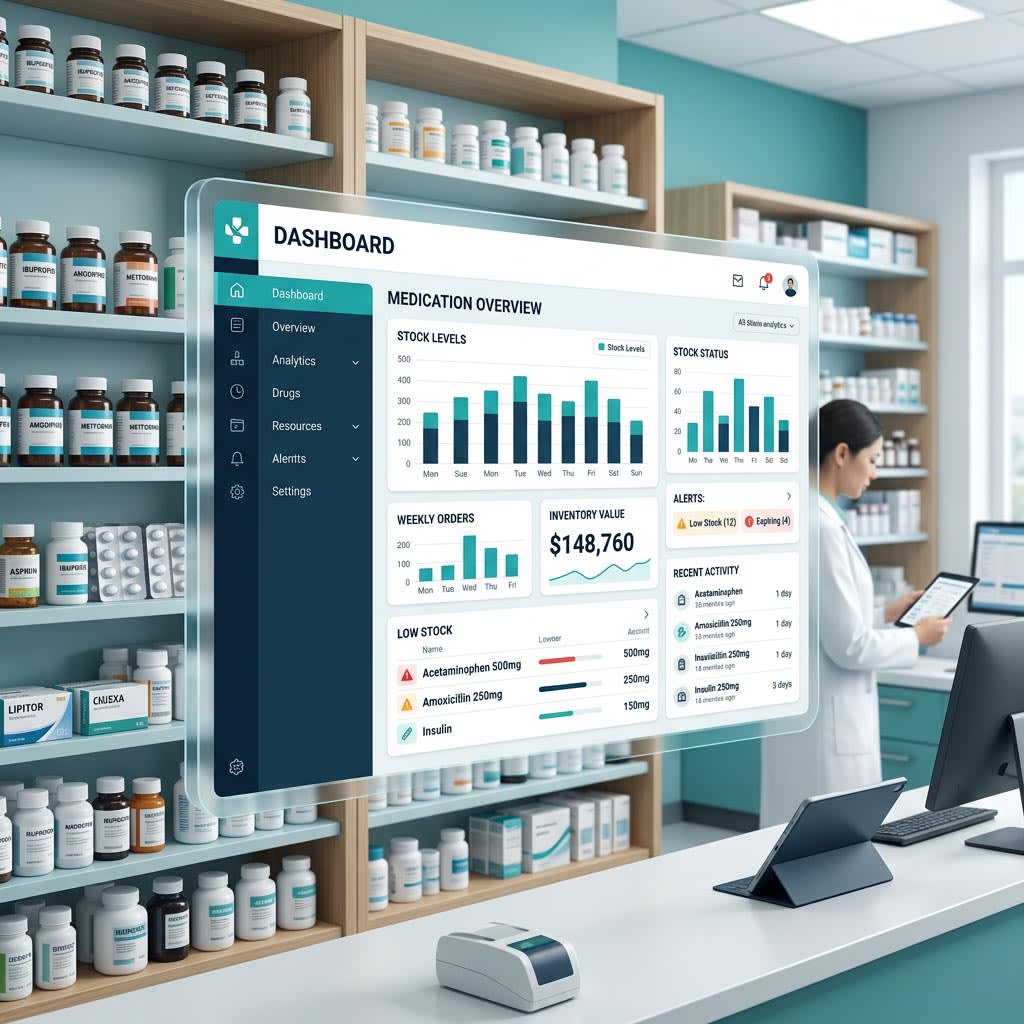
The pharmacy sector sits at a uniquely critical intersection of healthcare and operations management. Every tablet dispensed, every prescription verified, every expiry date monitored-these are not administrative minutiae but matters of patient safety and regulatory compliance. Yet across both retail and hospital pharmacies, inventory management remains one of the most error-prone and resource-intensive functions, frequently managed through outdated software, manual record-keeping, or fragmented point solutions that fail to communicate with each other. A purpose-built Digital Pharmacy Inventory and Operations Platform offers a transformative alternative: a unified, intelligent system that manages every dimension of pharmacy operations from procurement to dispensing, from compliance to analytics.
Traditional pharmacy operations-even in well-resourced hospital settings-suffer from a common set of systemic problems. Inventory counts are performed manually and infrequently, leading to either overstocking that ties up capital or stockouts that delay patient care. Expiry management is reactive rather than proactive, resulting in costly disposal of expired medications. Drug-drug interaction checks, dosage verification, and controlled substance tracking often rely on disconnected systems with no unified visibility. And when regulatory audits occur, the manual compilation of dispensing records, batch numbers, and audit trails is a time-consuming, error-prone exercise that diverts clinical and administrative staff from their primary responsibilities.
A modern Digital Pharmacy Inventory and Operations Platform is built on a multi-tier architecture that provides real-time visibility across all inventory touchpoints. At its foundation is a centralized inventory database synchronized in real time across all dispensing points-whether that is a single retail counter or a multi-floor hospital with satellite dispensing units. Every inventory movement, from receipt of a supplier shipment to individual unit dispensing, is recorded automatically through barcode or RFID scanning, creating a continuous, auditable chain of custody for every medication in the system.
The platform's inventory management module goes well beyond simple stock tracking. Machine learning-powered demand forecasting analyzes historical dispensing patterns, seasonal trends, physician prescribing behavior, and patient population data to generate accurate procurement recommendations. This proactive approach eliminates the reactive firefighting that characterizes traditional pharmacy procurement, ensuring that the right medications are available in the right quantities before demand peaks-not after stockouts have already impacted patient care.
Medication expiry management is one of the most significant financial and safety challenges in pharmacy operations. The platform provides configurable expiry alerts that notify relevant staff at predefined intervals before expiration-typically 6 months, 3 months, and 1 month-allowing sufficient time for redistribution, return to supplier, or controlled disposal. The system automatically surfaces near-expiry stock in dispensing workflows, prioritizing it for use before longer-dated units. Comprehensive expiry analytics provide management with visibility into waste trends by product category, supplier, and ordering patterns, enabling data-driven adjustments to procurement strategy.
The platform integrates prescription processing with clinical safety checks at the point of dispensing. Pharmacists are presented with a complete medication history for each patient, enabling real-time drug-drug interaction screening, allergy verification, and dosage validation against patient weight and renal function data where available. Controlled substance dispensing is managed through a dedicated workflow with dual-verification requirements, automated quantity reconciliation, and DEA-compliant audit trail generation. Integration with electronic health record (EHR) systems enables direct electronic prescription receipt, eliminating manual transcription errors and accelerating the dispensing workflow.
Pharmacy operations are subject to extensive regulatory oversight-from FDA regulations on controlled substances to state board pharmacy practice requirements, Joint Commission standards for hospital pharmacies, and HIPAA requirements for patient data protection. The platform is architected with compliance as a foundational requirement, not an afterthought. Every dispensing event, inventory adjustment, and user action is logged with a cryptographic timestamp and associated user identity, creating an immutable audit trail that satisfies regulatory requirements for record retention and access control.
A sophisticated analytics layer transforms raw operational data into actionable management intelligence. Executive dashboards provide real-time visibility into inventory value, turnover rates, dispensing volumes, and financial performance against budget. Department-level analytics help hospital pharmacy directors identify high-cost therapy trends, optimize formulary decisions, and monitor pharmacist productivity. Supplier analytics track on-time delivery performance, pricing trends, and quality issues, informing procurement strategy and contract negotiations. Predictive analytics surface emerging patterns-an unusual increase in specific medication demand that might indicate a disease outbreak, or a pattern of dispensing discrepancies that warrants investigation.
The platform is designed as an open integration hub rather than a closed system. Standard HL7 FHIR APIs enable bidirectional integration with major EHR platforms including Epic, Cerner, and Meditech. EDI integration with pharmaceutical distributors-McKesson, AmerisourceBergen, Cardinal Health-automates procurement workflows. Point-of-sale integration enables retail pharmacy operations management. Automated dispensing cabinet integration provides real-time visibility and control over unit-dose dispensing in clinical care settings. And billing system integration ensures that medication charges are accurately captured and transmitted to revenue cycle management systems without manual reconciliation.
Deploying a comprehensive pharmacy operations platform in a live clinical environment requires meticulous implementation planning. The phased deployment approach begins with inventory data migration and system configuration, proceeds through parallel operation where the new system runs alongside existing processes, and culminates in cutover with comprehensive staff training and on-site support. Change management is as important as technical implementation-pharmacists who understand why the new system improves their workflow and patient safety outcomes are far more likely to adopt it successfully than those presented with a new tool without adequate context and training.
At NeuroFlares, we have developed deep expertise in building healthcare technology platforms that meet the dual demands of clinical rigor and operational efficiency. Our pharmacy operations platform implementations bring together AI-driven forecasting, real-time IoT integration for cold chain monitoring, and a user experience designed for the workflow realities of clinical pharmacists-not the assumptions of software designers who have never filled a prescription. We work closely with pharmacy directors, clinical pharmacists, and IT leadership to design systems that solve real problems, integrate with existing infrastructure, and meet regulatory requirements from day one.
The business case for a digital pharmacy operations platform is compelling across multiple dimensions. Inventory optimization typically reduces carrying costs by 15-25% through improved turnover and reduced safety stock requirements. Expiry waste reduction delivers immediate savings that often partially offset platform costs in the first year. Staff time recaptured from manual inventory tasks can be redirected to clinical pharmacy services that improve patient outcomes and generate revenue. And the risk reduction value of improved compliance, medication safety, and audit readiness-while harder to quantify-represents significant protection against the financial and reputational costs of regulatory sanctions or adverse medication events.
The convergence of AI, IoT, and healthcare data standards is creating new possibilities for pharmacy operations that were science fiction a decade ago. Autonomous inventory robots that scan shelves and update digital counts in real time. Predictive analytics that anticipate medication needs at the individual patient level days before admission. AI pharmacist assistants that perform preliminary drug utilization reviews, flagging cases for human pharmacist attention. Blockchain-based supply chain verification that eliminates counterfeit medications. These are not distant possibilities-they are capabilities being deployed in leading healthcare systems today. The pharmacies and health systems that invest in foundational digital operations platforms now are building the infrastructure on which these next-generation capabilities will run.
Need to build with security and compliance at the core?
NeuroFlares helps you design and develop solutions that meet stringent security standards and regulatory requirements from the ground up.
Let's build something secure together.



2915 Ogletown Road, Newark, DE 19713, USA

213, G-Block, V.V.C.E, Gokulam, Mysore 570002, India
Connect with us
contact@neuroflares.com