
Quantum Computing: Principles, Architecture, and Enterprise Applications in the Modern Era
November 21, 2026
For decades, classical computing has driven exponential advances in global industry by manipulating binary bits-definite states of zero or one. Yet as our civilization confronts mathematically intractable challenges, ranging from molecular simulations for life-saving therapeutics to optimal global logistics and cryptographic resiliency, the classical paradigm encounters fundamental thermodynamic and computational ceilings. Quantum computing emerges not as a mere incremental speedup of classical computers, but as a revolutionary paradigm governed by the counterintuitive laws of quantum mechanics.
What is Quantum Computing? Beyond Binary Bits
At the heart of classical computation lies the binary bit, which exists strictly as a 0 or a 1. Quantum computers replace these discrete units with quantum bits, or qubits. Through the mathematical framework of quantum state vectors represented on the Bloch sphere, a qubit can exist in a continuum of states, embodying both 0 and 1 simultaneously until an observation or measurement forces it to collapse into a classical outcome.
This fundamental departure enables a quantum system of n qubits to simultaneously represent an exponential state space of 2ⁿ possibilities. Where a 300-bit classical register holds exactly one 300-bit number at any instant, a 300-qubit quantum processor can span more simultaneous states than there are estimated atoms in the observable universe.
Fundamental Principles: Superposition, Entanglement, and Interference
Quantum computational supremacy and advantage rest upon three core physical phenomena that have no analog in classical computing architecture:
- Superposition: A qubit exists in a linear combination of basis states (|ψ⟩ = α|0⟩ + β|1⟩), where the complex coefficients α and β determine probability amplitudes. This allows algorithms to evaluate multidimensional solution spaces concurrently rather than sequentially.
- Entanglement: When qubits interact, their quantum states become profoundly linked such that the state of one cannot be described independently of the others, regardless of physical separation. Entanglement weaves individual qubits into a collective, exponentially potent processing fabric.
- Quantum Interference: Computing with quantum states is not brute-force parallelism; it is wave mechanics. Quantum algorithms (such as Shor's or Grover's) are designed using constructive interference to amplify the probability amplitudes of the correct answers, while destructive interference cancels out erroneous computational paths before measurement.
Quantum Hardware Modalities: How Qubits are Engineered
Engineering reliable physical qubits is one of the most formidable technical challenges in modern experimental physics. Multiple competing hardware modalities are being aggressively pursued across academia and global tech leaders:
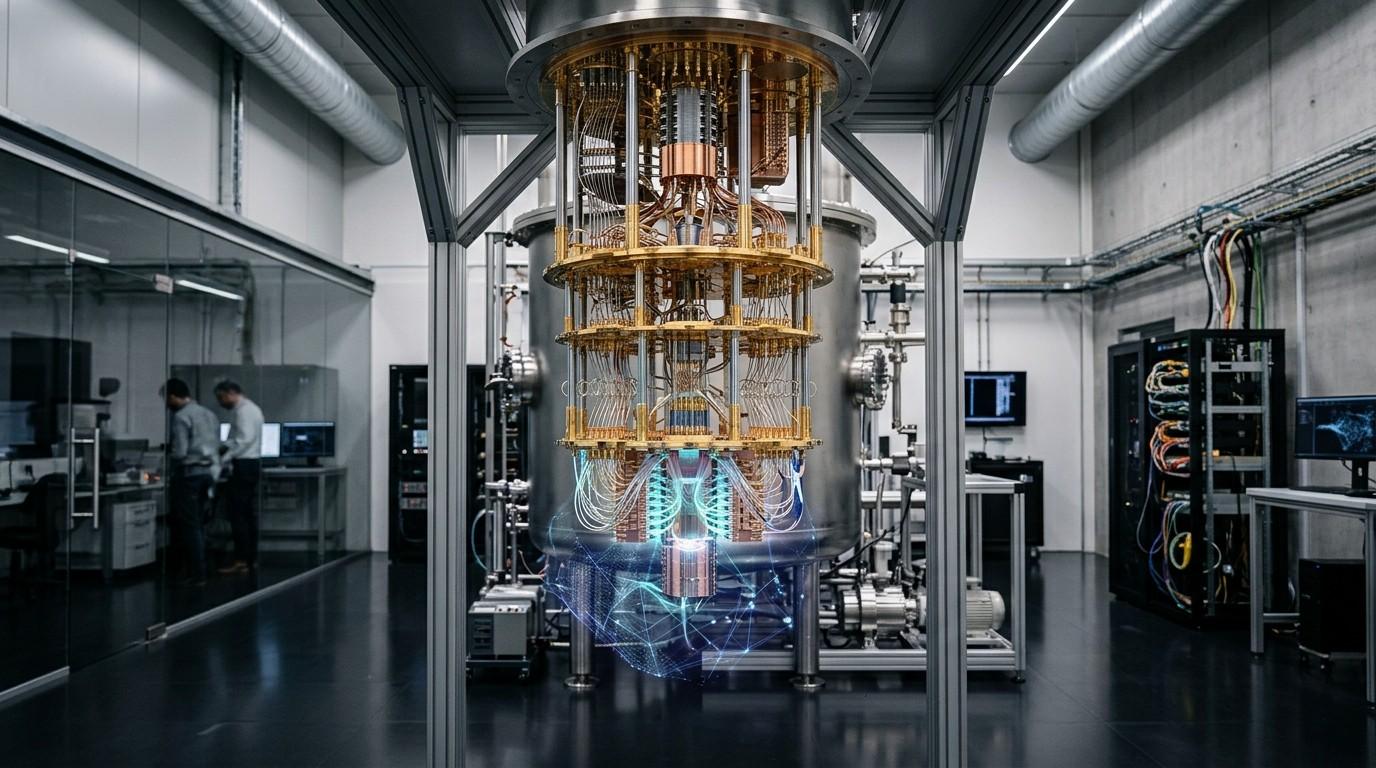
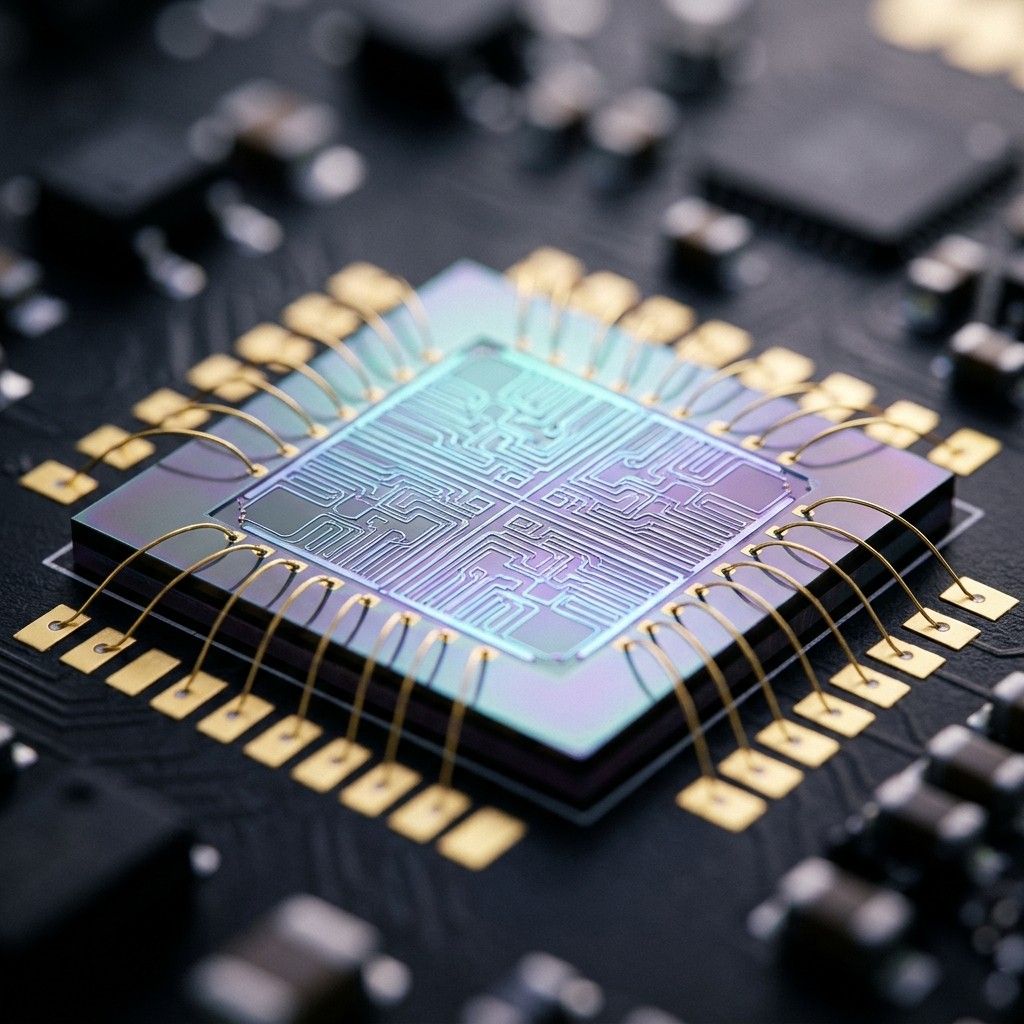
- Superconducting Transmon Qubits: Employed by IBM, Google, and Rigetti, these utilize lithographically fabricated Josephson junctions cooled to millikelvin temperatures (-273.14°C) inside dilution refrigerators. They offer rapid gate switching speeds and leverage established semiconductor fabrication processes.
- Trapped Ion Processors: Championed by Quantinuum and IonQ, individual charged atoms (such as Ytterbium or Barium) are suspended in vacuum by electromagnetic fields and manipulated using precise laser pulses. They demonstrate exceptional coherence times and record gate fidelities.
- Neutral Atom Arrays: Powered by systems like QuEra, neutral atoms held in optical tweezer grids provide dynamic 2D/3D geometric reconfigurability and high connectivity, making them superb for analog quantum simulations and combinatorial problem solving.
- Silicon Spin Qubits: Fabricated by trapping single electron spins inside standard silicon-metal-oxide structures, this approach benefits from decades of global silicon manufacturing expertise, promising high-density monolithic integration.
- Photonic Quantum Computing: Utilizing single photons traveling through optical waveguides at ambient temperatures, photonic systems offer inherent immunity to electromagnetic noise and natural synergy with quantum telecommunications networks.
The NISQ Era vs. Fault-Tolerant Quantum Computing
The current frontier resides in the Noisy Intermediate-Scale Quantum (NISQ) era. Present-day devices possess between 50 to 1,000+ physical qubits. However, these qubits are highly susceptible to environmental noise, thermal fluctuations, and stray electromagnetic fields-a phenomenon termed quantum decoherence-which introduces calculation errors before complex algorithms can finish running.
The holy grail of quantum computing is Fault-Tolerant Quantum Computing (FTQC), achieved through Quantum Error Correction (QEC). Using topological surface codes and bosonic codes, hundreds or thousands of noisy physical qubits are entangled into a single, noise-resilient "logical qubit." Recent breakthroughs in logical qubit demonstration and syndrome extraction indicate that fault-tolerant architectures are transitioning rapidly from theoretical physics into engineering reality.
High-Impact Enterprise Applications: Where Quantum Shines
Quantum computers are not designed to replace classical servers or smartphones for general everyday workloads. Instead, they operate as specialized accelerators designed for specific classes of mathematically intractable problems:
- Cryptography and Post-Quantum Security: Peter Shor's algorithm proves that a sufficiently scaled fault-tolerant quantum computer could break RSA and Elliptic Curve Cryptography (ECC) in polynomial time. This reality has catalyzed the global transition to Post-Quantum Cryptography (PQC) standards specified by NIST, including ML-KEM and ML-DSA.
- Molecular Simulation & Accelerated Drug Discovery: Simulating quantum chemistry with classical supercomputers scales exponentially with electron count. The Variational Quantum Eigensolver (VQE) algorithm maps electronic wavefunctions directly onto qubits, enabling accurate catalyst design, molecular bonding analysis, and accelerated pharmaceutical drug candidate screening.
- Complex Combinatorial Optimization & Logistics: Global supply chains, airline crew routing, grid distribution, and portfolio risk management struggle with NP-hard combinatorial explosions. Algorithms like QAOA (Quantum Approximate Optimization Algorithm) unlock near-optimal configurations in fractions of classical compute time.
- Material Science & Battery Innovation: Developing high-energy-density solid-state batteries, room-temperature superconductors, and efficient nitrogen fixation catalysts requires atomic-level quantum simulation that classical density functional theory cannot resolve without approximations.
- Quantitative Finance: Quantum Monte Carlo techniques offer quadratic speedups in multi-asset derivative pricing, value-at-risk (VaR) estimations, and high-frequency arbitrage modeling.
Quantum and Artificial Intelligence: A Mutual Acceleration
The confluence of Quantum Computing and Artificial Intelligence constitutes one of the most exciting multidisciplinary frontiers of the 21st century. Quantum Machine Learning (QML) leverages high-dimensional Hilbert spaces as natural feature spaces, allowing quantum kernel methods to identify subtle patterns in massive, unstructured datasets that classical support vector machines and deep networks cannot decouple.
Conversely, classical machine learning is actively accelerating quantum hardware development. Deep neural networks are deployed for real-time quantum error syndrome decoding, autonomous calibration of dilution refrigerator systems, and optimized pulse-shaping for high-fidelity quantum logic gates.
Overcoming the Grand Engineering Challenges
While progress has been extraordinary, significant engineering frontiers must still be bridged before commercial quantum advantage becomes ubiquitous across enterprise production:
- Coherence Lifetimes vs. Gate Speed: Maximizing the ratio of operational coherence time (T1 and T2 relaxation) to gate execution speed is critical to execute deeper quantum circuits before errors accumulate.
- Cryogenic Infrastructure: Cooling thousands of coaxial cables and signal lines inside dilution refrigerators poses extreme thermal load constraints, necessitating integrated cryogenic CMOS control chips operating inside the cold finger.
- Quantum Interconnects & Modular Scaling: Monolithic chips will eventually reach fabrication yield limits; modular quantum processors connected via photonic quantum coherent links are essential for scaling to millions of physical qubits.
- Software Stack Abstraction: Building high-level quantum programming languages, intermediate representations (QIR), and intelligent quantum compilers that perform noise-aware circuit mapping and hardware-specific topological routing.
Actionable Roadmap: How Modern Enterprises Prepare Today
Visionary technology leaders understand that waiting for full fault-tolerant hardware will leave their organizations vulnerable and behind. Forward-thinking enterprises are already implementing quantum readiness roadmaps:
- Conduct a Cryptographic Inventory: Audit corporate databases, TLS certificates, identity protocols, and data pipelines to identify assets vulnerable to "Harvest Now, Decrypt Later" quantum attacks, and begin planning PQC migration.
- Identify Domain-Specific Computational Bottlenecks: Pinpoint the core computational algorithms within your business (e.g., optimization, portfolio balancing, fluid dynamics) where classical compute costs or timeouts constrain business performance.
- Leverage Cloud-Based Quantum Sandboxes: Utilize established quantum cloud providers and SDKs (such as Qiskit, Cirq, Pennylane, AWS Braket, and Azure Quantum) to simulate quantum circuits and develop internal institutional expertise.
- Adopt Hybrid Classical-Quantum Architectures: Design software platforms with modular interfaces so that quantum processing units (QPUs) can seamlessly serve as co-processors alongside classical CPUs and GPUs.
NeuroFlares' Commitment to Frontier Computing
At NeuroFlares, our core mission is empowering innovative enterprises with transformative software architectures. From developing state-of-the-art AI systems and high-throughput cloud platforms to preparing corporate data architectures for post-quantum security standards, our engineering team operates at the intersection of proven reliability and frontier technology.
Whether your organization is exploring post-quantum cryptographic security, evaluating quantum-inspired optimization algorithms, or seeking technical advisory on emerging computational paradigms, NeuroFlares is your strategic partner in navigating the future of computing.
Conclusion
Quantum computing is no longer confined to the pages of theoretical physics journals; it is an accelerating industrial reality poised to redefine commerce, medicine, security, and computing itself. By understanding the core principles of quantum information science and adopting proactive preparation strategies today, forward-looking enterprises can position themselves at the vanguard of the computational revolution.
Exploring this technology for your next project?
NeuroFlares specialises in building cutting-edge software solutions powered by the latest innovations. Let us turn your ideas into reality.
Let's work together.You May Also Like
n8n: The Open-Source Workflow Automation Platform Redefining AI Pipelines
Read Article
REA: The AI That Can Reverse Engineer and Replicate Any App
Read Article
HIPAA Compliance in Healthcare Software: How we deliver Secure and Trusted Medical Applications
Read ArticleOur Locations

Delaware
2915 Ogletown Road, Newark, DE 19713, USA

Mysore
213, G-Block, V.V.C.E, Gokulam, Mysore 570002, India



Connect with us
contact@neuroflares.com