


Connect with us
contact@neuroflares.com


February 14, 2026
There is a seductive idea gaining traction across tech communities: that AI-assisted "vibe coding"-the practice of describing what you want in natural language and letting an LLM generate the code-is sufficient to build production-ready software. Proponents argue that the barrier to software creation has collapsed, that anyone can now build anything, and that traditional software engineering expertise is becoming obsolete. This is a dangerous oversimplification. Vibe coding is a powerful tool, but it is not a replacement for genuine development experience-and conflating the two leads to fragile systems, compounding technical debt, and ultimately, software that fails when it matters most.
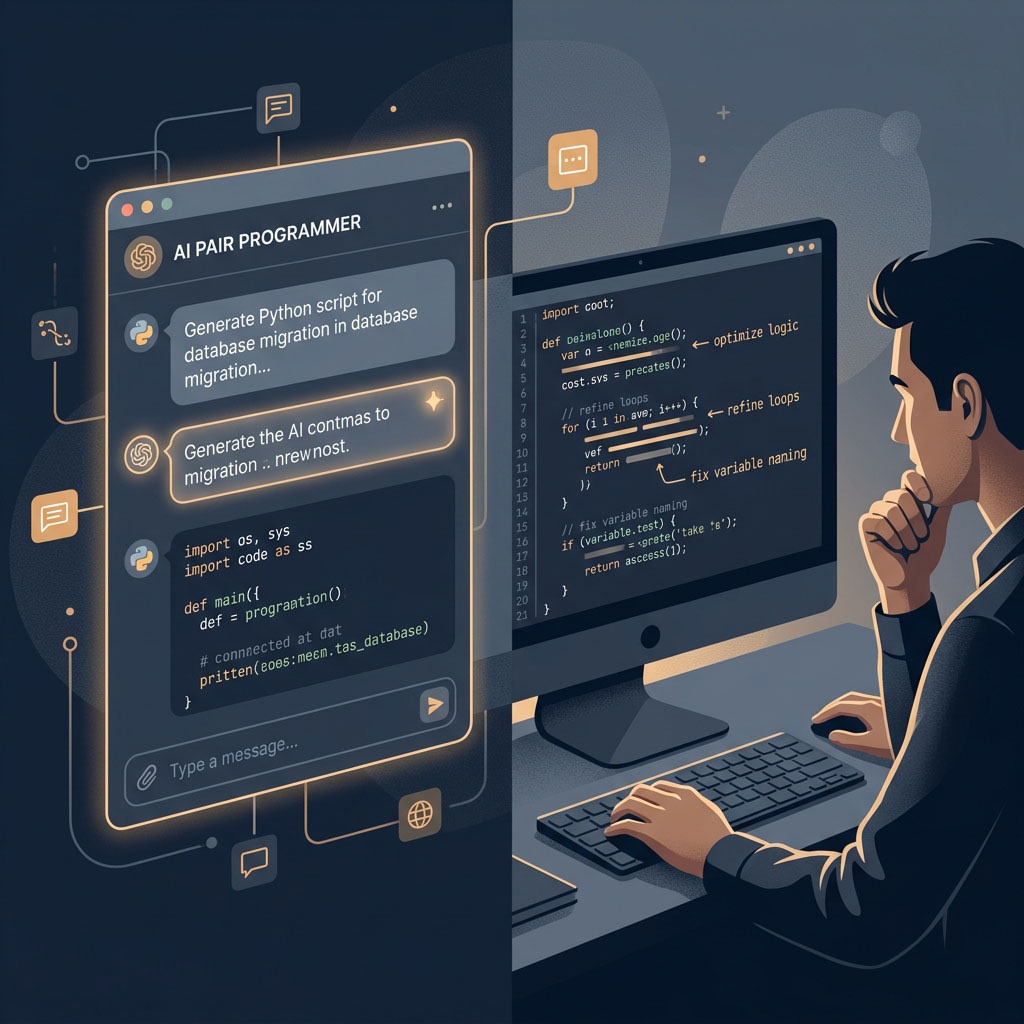
Coined and popularized as AI coding tools matured, "vibe coding" refers to the practice of using conversational AI-tools like GitHub Copilot, Cursor, Claude, or ChatGPT-to generate functional code from natural language prompts. The developer describes their intent ("build me a REST API that handles user authentication with JWT tokens"), and the AI produces working code. At its best, it dramatically accelerates boilerplate generation, reduces cognitive overhead on well-understood problems, and allows developers to explore unfamiliar frameworks without deep prior knowledge.
For prototyping, internal tooling, and well-scoped greenfield projects, vibe coding can genuinely compress weeks of work into hours. It is a real productivity multiplier-but only when wielded by someone who knows enough to evaluate, debug, and extend what the AI produces.
The most dangerous aspect of vibe coding is not what it cannot do-it is what it makes you think you can do. An AI can generate 200 lines of syntactically valid, seemingly functional code in seconds. To an inexperienced eye, this looks like expertise. The code compiles. The tests pass. The demo works. But experienced engineers immediately recognize the footprints of generated code: missing edge case handling, naive database query patterns that will collapse under load, authentication logic that passes unit tests but fails against real-world attack vectors, and dependency choices made without consideration of long-term maintainability.
This gap between appearance and reality is precisely where vibe coding without development experience becomes dangerous. The non-engineer who generates a working login page does not know to ask: Is this SQL injection safe? Is this token storage approach CSRF-resistant? What happens if the session expires mid-transaction? These are not AI limitations-they are knowledge limitations that no amount of prompting can compensate for.
Software engineering is not primarily about writing code. It is about making thousands of decisions-architectural, algorithmic, organizational-that collectively determine whether a system is maintainable, scalable, secure, and correct. AI can produce code, but it cannot make these decisions on your behalf without deep context that only comes from experience.
The most effective way to think about AI coding tools is as an exceptionally fast, broadly knowledgeable, but ultimately junior developer who needs supervision. A junior developer can write code quickly, pull in relevant libraries, and produce working implementations of described features. But they need a senior engineer to review their pull requests, catch their blind spots, and guide the overall architecture. AI coding assistants operate in exactly the same paradigm-and treating them otherwise is a recipe for systems that work in demos but fail in production.
Consider the scenarios where vibe coding has the highest failure rate: distributed systems with complex consistency requirements, high-traffic APIs where naive implementations cause cascading failures, security-sensitive applications where generated authentication code introduces vulnerabilities, legacy codebases with domain-specific conventions and implicit contracts, and real-time systems where timing and resource management require precise low-level reasoning. In every one of these domains, the value of deep engineering experience is not diminished by AI tools-it is amplified. The engineer who deeply understands concurrency models produces dramatically better prompts, evaluates AI output more accurately, and catches errors that an inexperienced prompter would ship to production.
A common misconception in the "vibe coding" narrative is that AI democratizes software development by leveling the playing field between experts and novices. The reality is more nuanced and arguably the opposite: AI tools make expert engineers dramatically more productive, while giving novices the ability to create systems they do not fully understand. A senior engineer using Cursor or Copilot writes more code, explores more approaches, and ships faster. A non-engineer using the same tools produces working code that they cannot debug, extend, or secure when requirements change.
At NeuroFlares, we embrace AI coding tools as a core part of our development workflow-they help us move faster, explore ideas more freely, and reduce friction on well-understood implementation tasks. But we pair these tools with deep engineering expertise at every layer. Our architects design systems before AI generates implementations. Our engineers review generated code with the same rigor applied to human-written pull requests. Our security practices are evaluated independently of the code generation approach. This combination-AI velocity with engineering depth-is what produces reliable, maintainable, production-grade software.
As AI coding tools become ubiquitous, the organizations that thrive will not be those who replace engineers with prompts-they will be those who cultivate engineering culture alongside AI adoption. This means investing in code review practices, architectural documentation, security training, and the kind of mentorship that transfers tacit knowledge that no LLM has been trained to replicate. The vibe coding era does not make engineering expertise obsolete-it makes the engineers who have it more valuable than ever.
The future of software development is not vibe coding alone, nor is it the dismissal of AI tools as gimmicks. It is the combination: engineers who have invested in deep technical expertise, who understand systems at multiple layers of abstraction, and who use AI tools to amplify their capabilities rather than bypass the need for knowledge. The engineers who master this combination-who know enough to guide AI effectively, evaluate its outputs critically, and integrate them into well-designed systems-will define the next generation of software.
Exploring this technology for your next project?
NeuroFlares specialises in building cutting-edge software solutions powered by the latest innovations. Let us turn your ideas into reality.
Let's work together.


2915 Ogletown Road, Newark, DE 19713, USA

213, G-Block, V.V.C.E, Gokulam, Mysore 570002, India
Connect with us
contact@neuroflares.com